
Why Are My Gutters Overflowing in Burlington, Oakville & Hamilton?
You watch a heavy rain roll through and notice water pouring over the edge of your eavestrough instead of flowing down the downspout. It is a common sight across Burlington, Oakville and Hamilton in late fall, and it is almost always a sign that something is blocking the system. The good news is that the cause is usually easy to identify, and fixing it before winter can save you from much bigger problems.
This guide covers the most common causes and when to arrange eavestrough cleaning in Burlington, Oakville and Hamilton.
The Most Common Reasons Gutters Overflow
1. Leaves, Seeds and Debris Build-Up
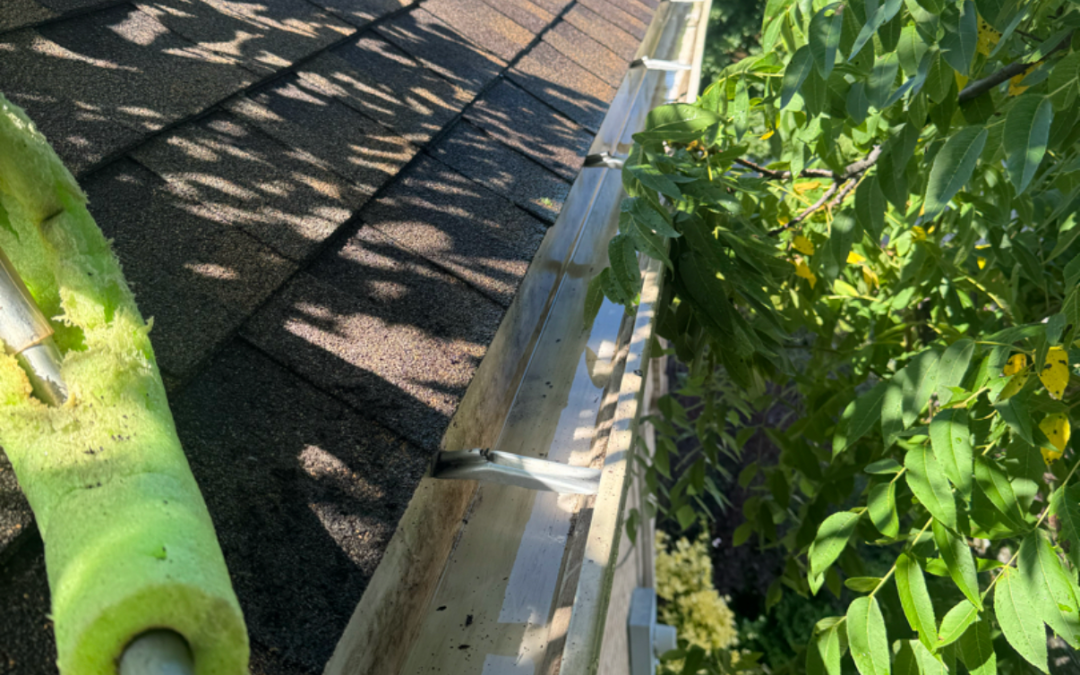
This is the number one cause. Maples, oaks, ash and honey locust trees are everywhere in neighbourhoods like Old Oakville, Aldershot, Ancaster and Dundas, and their leaves, seeds and twigs end up in the trough. Once debris packs the downspout opening, water has nowhere to go and spills over the front edge.
2. Clogged Downspouts
Sometimes the trough looks fairly clear, but the downspout is plugged. Wet leaves, shingle grit and small branches settle at the elbow and form a dense plug. Water backs up behind it and overflows at the nearest low point.
3. Sagging or Poorly Pitched Gutters
Eavestroughs need a slight slope toward the downspout. Over time, loose hangers, heavy debris and winter ice can pull a section out of alignment. Water then pools in the middle instead of draining, and it spills over even when nothing is clogged.
4. Too Few Downspouts for the Roof
Larger roofs and long gutter runs, common on newer homes in Oakville and Burlington, need enough downspouts to carry heavy rainfall. If one downspout serves too much roof area, it can be overwhelmed in a storm even when it is perfectly clean.
5. Granules, Moss and Sediment
Asphalt shingles shed granules as they age, and shaded roofs can grow moss. This fine material washes into the trough and builds up into a thick sludge that slowly reduces the space available for water.
What Overflowing Gutters Can Do to Your Home
A little splashing over the edge might not look serious, but repeated overflow causes real damage over time.
- Foundation and basement issues: Water dumped beside the foundation soaks the soil and can contribute to cracking, pooling and basement dampness.
- Fascia and soffit rot: Constant moisture breaks down the boards behind the gutter and invites mould and pests.
- Stained siding and eroded landscaping: Dark streaks on the wall and washed-out garden beds are classic signs of overflow.
- Ice dams and heavy ice loads: Water left in the trough freezes, and the weight can bend hangers and pull the system away from the house.
That last point matters most this time of year. Standing water in November turns into a block of ice in December, and it can stay there until spring. Our post on when to schedule fall gutter cleaning in Burlington, Oakville & Hamilton explains why timing your cleaning before the first hard freeze makes such a difference.
How to Tell Where the Problem Is
You can learn a lot from the ground during the next rainfall. Look for these clues:
- Water spilling in one spot usually points to a clogged downspout or a low section.
- Water spilling along the whole length suggests the trough is full of debris.
- Water running behind the gutter and down the wall can mean the gutter has pulled away from the fascia.
- A downspout that trickles or stays dry during heavy rain is almost certainly blocked.
If you can see plants growing from the trough, sagging sections, or seams that drip, the system needs attention now rather than later.
How Professional Eavestrough Cleaning Fixes Overflow
A proper cleaning clears every metre of the trough, flushes each downspout to confirm water moves freely, and checks for loose hangers or sections that hold water. Most overflow problems are solved right there. If something more involved is going on, such as a pitch issue or a missing downspout, a trained crew can spot it and tell you what to do next.
MasterShine provides professional eavestrough cleaning in Burlington, Oakville and Hamilton with reliable scheduling through the fall. Many homes in the region are two storeys or taller, and wet leaves on a ladder are a recipe for injury, so this is a job best left to trained crews with the right equipment.
Preventing Overflow Next Season
Once your gutters are flowing again, a few habits keep them that way:
- Schedule a cleaning each fall after most leaves have dropped, and a second visit if your trees are heavy shedders.
- Trim back branches that hang over the roofline.
- Make sure downspouts discharge well away from the foundation.
- Consider gutter guards if you find yourself clearing the same troughs again and again. They keep out much of the debris that causes overflow in the first place.
Clean Gutters Make Holiday Lighting Easier
If you plan to decorate this year, the best order is gutters first, lights second. Clean, secure eavestroughs give lights a solid surface along the roofline, and crews can work without fighting leaves and debris. Our Christmas light installation in Burlington, Oakville and Hamilton can be booked alongside your fall cleaning so both jobs are done before the snow arrives.
The Bottom Line
Gutters overflow in Burlington, Oakville and Hamilton for a handful of predictable reasons: debris, blocked downspouts, poor pitch, too few downspouts, and shingle sediment. Most are simple to fix, but ignoring them lets water damage your foundation, fascia and roofline, and winter freezing makes everything worse.
If your eavestroughs are spilling over, contact MasterShine about eavestrough cleaning in Burlington, Oakville and Hamilton before the cold sets in.